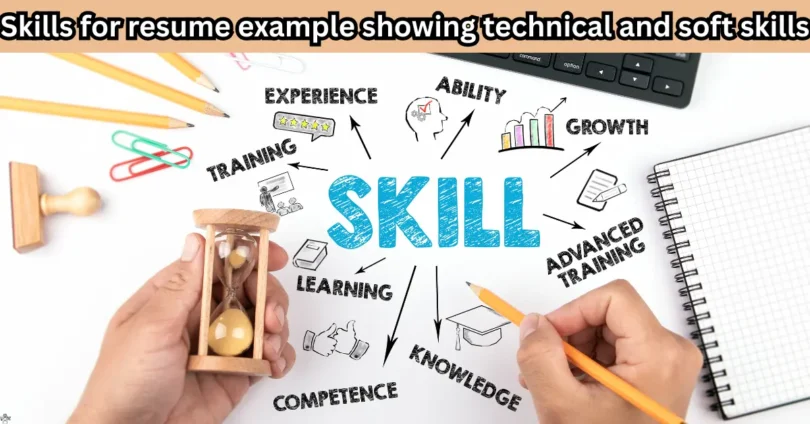

Choosing the right skills for resume writing is not about filling a section with impressive words. It is about showing an employer that you can perform the work, solve relevant problems and contribute to the organisation.
This distinction matters in USA competitive employment market. A recruiter hiring for an entry-level analyst, sales executive, software developer or operations manager may review hundreds of applications. Candidates who merely list “communication,” “leadership” and “hard-working” often sound identical. Candidates who connect their skills to projects, responsibilities and measurable outcomes are easier to shortlist.
A strong resume should therefore answer three questions:
- Do you possess the capabilities required for this role?
- Have you applied those capabilities in a real situation?
- Can the recruiter find the evidence quickly?
Choosing Skills for Resume carefully can improve your job application. The right Skills for Resume show your strengths, while relevant Skills for Resume match the job. Employers review Skills for Resume to understand your abilities. Well-written Skills for Resume increase credibility. Your Skills for Resume should be specific, tailored Skills for Resume should match requirements, and honest Skills for Resume should reflect experience. Clear Skills for Resume create impact, while strong Skills for Resume improve selection chances.
This guide explains which skills to include, how to select them from a job description, where to place them and how to prove them. It includes examples for freshers, experienced professionals, career changers and applicants across major industries in USA.
What Are the Best Skills for a Resume?
The best skills for a resume are abilities that are:
- Directly relevant to the target job
- Supported by experience, education or projects
- Expressed using language employers understand
- Specific enough to evaluate
- Honest and defensible during an interview
An effective resume normally combines four types of skills:
- Technical skills: Tools, technologies and methods used to perform the job
- Soft skills: Behavioural abilities such as communication and collaboration
- Transferable skills: Capabilities that remain useful across roles and industries
- Domain skills: Knowledge specific to a sector, function or regulatory environment
For example, a digital marketing candidate might include Google Analytics, search engine optimisation, campaign reporting and copywriting as technical skills. Stakeholder communication and problem-solving may support these, but they should not replace the job-specific capabilities.
Why Resume Skills Matter in USA Job Market
Skills help recruiters translate your education and employment history into potential job performance.
This is especially important when:
- You are a fresher without full-time experience
- Your degree does not directly match the job
- You are changing careers or industries
- Your previous job title is unfamiliar
- You are applying through an online recruitment portal
- The employer uses an applicant tracking system
- You are competing for a role with many similarly qualified candidates
USA National Career Service allows jobseekers to enter multiple key skills and search for opportunities connected to their capabilities. This reflects a broader shift towards skills-based matching rather than reliance on qualifications or job titles alone.
International workforce research points in the same direction. The World Economic Forum’s Future of Jobs Report 2025 identifies technological literacy, AI and big data, cybersecurity, analytical thinking, creative thinking, resilience and collaboration among important or rapidly growing capabilities.
That does not mean every candidate should add artificial intelligence or data analytics to a resume. It means applicants should understand how their profession is changing and demonstrate the most relevant combination of technical and human capabilities.
Hard Skills, Soft Skills and Transferable Skills
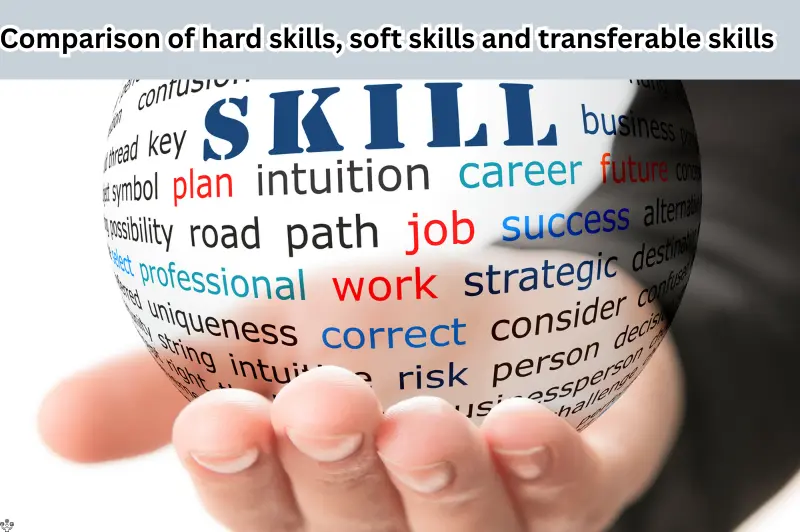
Understanding the difference between skill categories helps you create a balanced resume.
| Skill type | What it means | Examples | Best way to prove it |
| Hard skills | Teachable, job-specific abilities | Excel, Python, Tally, AutoCAD, SEO | Projects, certifications and work results |
| Soft skills | Behavioural abilities used at work | Communication, adaptability, teamwork | Achievement-focused experience bullets |
| Transferable skills | Capabilities useful across industries | Analysis, planning, negotiation | Examples from work, college or volunteering |
| Domain skills | Knowledge of a particular field | GST compliance, KYC, supply chain planning | Relevant responsibilities and outcomes |
| Language skills | Ability to communicate in a language | English, Hindi, Tamil, Bengali | Proficiency level and professional use |
Hard skills for resume writing
Hard skills help employers understand what you can actually do. Depending on the job, they may include:
- Software and platform knowledge
- Programming languages
- Financial or accounting methods
- Machinery operation
- Research techniques
- Marketing platforms
- Design software
- Regulatory knowledge
- Project management methods
- Data analysis techniques
These skills are often easier to verify through work samples, assessments, certificates or interview questions.
Choosing Skills for Resume carefully can improve your job application. The right Skills for Resume show your strengths, while relevant Skills for Resume match the job. Employers review Skills for Resume to understand your abilities. Well-written Skills for Resume increase credibility. Your Skills for Resume should be specific, tailored Skills for Resume should match requirements, and honest Skills for Resume should reflect experience. Clear Skills for Resume create impact, while strong Skills for Resume improve selection chances.
Soft skills for resume writing
Soft skills influence how you apply your knowledge. Common examples include:
- Clear communication
- Team collaboration
- Time management
- Adaptability
- Conflict resolution
- Critical thinking
- Attention to detail
- Leadership
- Empathy
- Decision-making
Avoid presenting soft skills as unsupported adjectives. Instead of writing “excellent leadership,” explain that you “coordinated a six-member college team and delivered the final project two weeks before the deadline.”
Transferable skills for career changers
Transferable skills are particularly valuable when moving into a different profession.
A teacher applying for a corporate learning role may highlight:
- Training delivery
- Curriculum development
- Presentation skills
- Learner assessment
- Progress reporting
- Stakeholder communication
The industry is changing, but many underlying capabilities remain relevant.
How to Choose the Right Skills for Your Resume
The right skills depend on the specific vacancy—not on a universal list found online.
Step 1: Study the job description
Read the job advertisement and highlight:
- Required tools or software
- Repeated responsibilities
- Required certifications
- Industry terminology
- Behavioural expectations
- Preferred experience
- Performance goals
Pay attention to skills mentioned more than once. If a sales job repeatedly mentions lead generation, CRM management, client presentations and revenue targets, those capabilities are probably central to the role.
Step 2: Separate essential and optional skills
Create three groups:
| Group | Meaning | Action |
| Essential | Explicitly required for the role | Include if you genuinely possess it |
| Preferred | Helpful but not mandatory | Add when relevant and supported |
| Unrelated | Not connected to the vacancy | Remove from this version |
This prevents your resume from becoming a catalogue of everything you have ever learned.
Step 3: Match the employer’s terminology
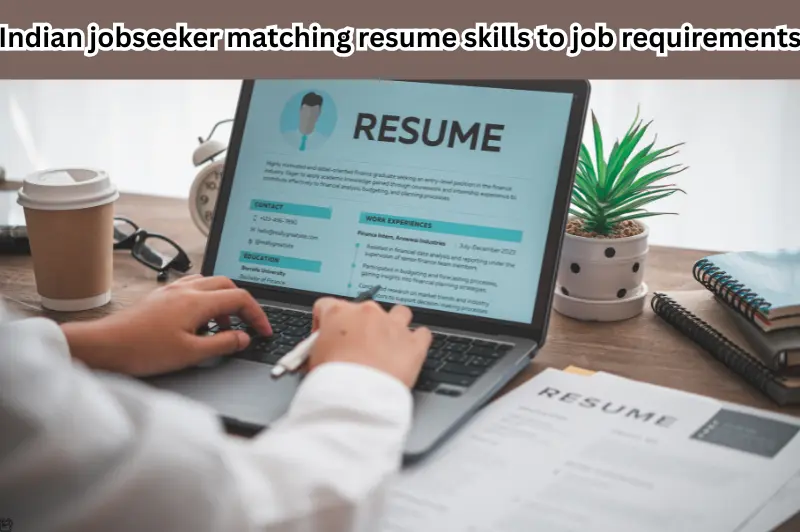
If the employer asks for “customer relationship management,” use that phrase where accurate instead of only writing “client handling.”
Matching terminology improves clarity and may help an applicant tracking system recognise relevant information. However, do not copy complete sentences from the advertisement or add skills you cannot demonstrate.
Step 4: Rank skills by relevance and strength
A simple scoring method can help:
- Give a skill two points if it is essential to the job.
- Give it two points if you have used it in work or a substantial project.
- Give it one point if you hold a credible certification.
- Give it one point if you can discuss a measurable result.
Prioritise the highest-scoring capabilities.
Step 5: Confirm that every skill is interview-safe
Before adding a skill, ask:
- Can I explain where I learned it?
- Can I describe a time I used it?
- Could I complete a basic assessment?
- Can I discuss my current proficiency honestly?
If the answer is no, remove the skill or describe it as “basic knowledge” rather than claiming proficiency.
Most Valuable Skills for Resume Writing
The following capabilities are useful across many USA workplaces, but their value depends on the position.
Communication skills
Communication includes more than speaking fluent English. It can involve:
- Business writing
- Client presentations
- Active listening
- Report writing
- Negotiation
- Meeting facilitation
- Customer communication
- Multilingual support
A better resume example is:
Prepared weekly performance reports and presented operational findings to managers across three regional teams.
This provides context instead of making an unsupported claim.
Analytical and problem-solving skills
Analytical thinking is valuable in finance, operations, technology, consulting, marketing and many administrative roles.
Relevant abilities include:
- Root-cause analysis
- Data interpretation
- Process evaluation
- Forecasting
- Research
- Troubleshooting
- Risk assessment
- Decision-making
Whenever possible, connect the skill to an improvement:
Analysed customer complaint data and identified a recurring dispatch issue, helping reduce repeat complaints by 18%.
Digital literacy
Digital literacy now extends beyond knowing how to use email. It may include:
- Microsoft Office or Google Workspace
- Online collaboration tools
- Spreadsheet management
- Video conferencing
- Digital file organisation
- Cybersecurity awareness
- Responsible use of generative AI
- Basic data privacy practices
Candidates should name the tools they can use rather than writing only “computer skills.”
Artificial intelligence literacy
AI literacy can be valuable when it supports the target role. Examples include:
- Prompt development
- AI-assisted research
- Content review
- Workflow automation
- Output validation
- Data privacy awareness
- Responsible AI use
Avoid listing “ChatGPT” as a standalone skill without context. A stronger description would be:
Used generative AI tools to produce first-draft research summaries, followed by source verification and editorial review.
Choosing Skills for Resume carefully can improve your job application. The right Skills for Resume show your strengths, while relevant Skills for Resume match the job. Employers review Skills for Resume to understand your abilities. Well-written Skills for Resume increase credibility. Your Skills for Resume should be specific, tailored Skills for Resume should match requirements, and honest Skills for Resume should reflect experience. Clear Skills for Resume create impact, while strong Skills for Resume improve selection chances.
The human review component matters. Employers need evidence that you can use AI responsibly, not merely generate unverified output.
Collaboration and teamwork
Collaboration is important in hybrid, cross-functional and customer-facing environments.
Demonstrate it through examples such as:
- Coordinating with another department
- Contributing to a group project
- Resolving a team disagreement
- Supporting a new colleague
- Working with remote stakeholders
- Sharing technical knowledge
Adaptability and learning agility
Adaptability becomes credible when it is connected to change. You might mention:
- Learning a new platform
- Taking over an unfamiliar responsibility
- Supporting a process transition
- Working under a changed deadline
- Moving between onsite and remote work
- Updating a procedure after new regulations
Project and time management
Useful project-related skills include:
- Scheduling
- Prioritisation
- Budget tracking
- Resource allocation
- Risk management
- Agile or Scrum practices
- Documentation
- Progress reporting
Do not list every project management method unless you have used it. Familiarity gained from a short video is different from practical experience.
Leadership skills
Leadership is not limited to candidates with managerial titles. Freshers can demonstrate it through college societies, internships, sports, volunteering and academic projects.
Evidence may include:
- Assigning responsibilities
- Mentoring teammates
- Managing deadlines
- Leading a presentation
- Handling a difficult stakeholder
- Improving a process
- Taking ownership during a problem
Role-Based Skills for Resume Examples
This table offers a starting point. Tailor the final selection to the vacancy.
| Target role | Relevant technical skills | Supporting soft skills |
| Software developer | Java, Python, Git, SQL, REST APIs, debugging | Problem-solving, code review, collaboration |
| Data analyst | Excel, SQL, Power BI, Tableau, statistics | Analytical thinking, data storytelling |
| Accountant | TallyPrime, GST, TDS, reconciliation, Excel | Accuracy, confidentiality, organisation |
| Digital marketer | SEO, Google Ads, analytics, content strategy | Creativity, communication, experimentation |
| Sales executive | CRM, lead qualification, pipeline management | Negotiation, persuasion, relationship building |
| HR executive | Recruitment, onboarding, HRIS, payroll support | Empathy, discretion, conflict resolution |
| Customer service executive | Ticketing systems, CRM, complaint handling | Patience, listening, de-escalation |
| Mechanical engineer | AutoCAD, SolidWorks, quality control, maintenance | Safety awareness, analysis, teamwork |
| Civil engineer | AutoCAD, estimation, site supervision, BOQ | Vendor coordination, planning, attention to detail |
| Graphic designer | Adobe Photoshop, Illustrator, Figma, typography | Creativity, feedback management, visual communication |
| Teacher | Lesson planning, assessment, classroom technology | Presentation, patience, mentoring |
| Operations executive | MIS reporting, inventory control, SOPs, Excel | Coordination, prioritisation, problem-solving |
Skills for IT resumes
Technology candidates should organise their capabilities into clear categories:
- Languages: Java, Python, JavaScript, C++, SQL
- Frameworks: React, Angular, Spring Boot, Django
- Databases: MySQL, PostgreSQL, MongoDB
- Cloud and DevOps: AWS, Azure, Docker, Kubernetes, CI/CD
- Tools: Git, Jira, Postman
- Methods: Agile, testing, API development, debugging
Only include technologies you can discuss confidently. A shorter list with evidence is stronger than a long list of tools encountered once.
Skills for finance and accounting resumes
Useful capabilities may include:
- Financial reporting
- Bookkeeping
- Bank reconciliation
- GST and TDS processes
- Accounts payable and receivable
- Budgeting
- Variance analysis
- Advanced Excel
- TallyPrime
- ERP software
- Audit support
- Financial modelling
Because accuracy and confidentiality are central to finance, show them through responsibilities rather than treating them as decorative keywords.
Skills for marketing resumes
Marketing skills should reflect the candidate’s specialisation:
- Search engine optimisation
- Paid advertising
- Social media management
- Email marketing
- Content strategy
- Copywriting
- Campaign analysis
- Conversion rate optimisation
- Market research
- Customer segmentation
- Marketing automation
Include metrics such as organic traffic, qualified leads, cost per acquisition, click-through rate or conversion rate when available.
Skills for sales and customer service resumes
Relevant capabilities include:
- Prospecting
- Lead qualification
- Consultative selling
- CRM management
- Product demonstrations
- Objection handling
- Account management
- Customer retention
- Complaint resolution
- Upselling and cross-selling
Sales candidates should connect these skills to targets, revenue, conversion or retention outcomes.
Best Skills for a Fresher Resume
Freshers often assume they have no skills because they have not held a permanent job. In reality, abilities can come from:
- Academic projects
- Internships
- Freelance assignments
- Hackathons
- College societies
- Volunteering
- Part-time employment
- Online courses
- Personal projects
- Sports and competitions
A fresher’s skills section might look like this:
Skills
- Data analysis: Microsoft Excel, SQL and beginner-level Power BI
- Reporting: Data cleaning, pivot tables and dashboard preparation
- Communication: Research presentations and written project documentation
- Collaboration: Four-member capstone project completed within a ten-week schedule
- Languages: English and Hindi—professional working proficiency
The projects section should then prove these claims:
Analysed 8,000 e-commerce transaction records using Excel and SQL, identified seasonal sales patterns and presented findings through a Power BI dashboard.
This is more convincing than listing “Excel, SQL, Power BI, teamwork and communication” without context.
What freshers should avoid
- Rating every skill five out of five
- Listing basic internet browsing as a technical skill
- Adding software never used outside a tutorial
- Including school-level abilities that do not support the job
- Describing oneself as an expert without evidence
- Using generic terms such as “smart worker” or “positive attitude”
Skills for Experienced Professionals
Experienced candidates should place greater emphasis on depth, scale and outcomes.
Compare these statements:
Weak: Team management, communication and problem-solving.
Stronger: Led a 12-member customer support team, introduced weekly quality reviews and improved first-contact resolution from 68% to 79% within six months.
The second version proves several skills simultaneously:
- Leadership
- Quality management
- Coaching
- Performance analysis
- Process improvement
- Customer service
For senior candidates, skills should also reflect the level of responsibility. Instead of only listing operational tools, consider:
- Strategic planning
- Budget ownership
- Stakeholder management
- Team development
- Vendor negotiation
- Change management
- Governance
- Risk management
- Cross-functional leadership
Skills for Career Change Resumes
A career-change resume must bridge the old role and the new one.
Suppose a bank relationship manager wants to enter customer success in a software company. Relevant transferable skills might include:
- Client onboarding
- Account management
- Needs analysis
- Product education
- Retention
- Escalation handling
- Relationship building
- CRM documentation
Banking terminology that does not help the target employer can be reduced. The resume should emphasise the shared business function: helping customers adopt a service, solve problems and remain engaged.
A useful formula is:
Previous experience + transferable capability + evidence relevant to the new role
For example:
Managed a portfolio of 120 priority customers, conducted needs-based consultations and maintained a 91% annual retention rate.
Where to Put Skills on a Resume
Skills should not exist in only one isolated section. Strong resumes distribute evidence across several areas.
Professional summary
Mention two or three defining capabilities:
Data analyst with three years of experience using SQL, Excel and Power BI to automate reporting and translate operational data into management insights.
Dedicated skills section
Use a concise, scannable format:
Technical Skills: SQL, Power BI, Advanced Excel, Power Query
Analysis: Data cleaning, dashboard design, variance analysis
Tools: Jira, Git, Google Workspace
Languages: English, Hindi, Marathi
Work experience
Prove the abilities through results:
Automated a weekly Excel reporting workflow using Power Query, reducing preparation time from five hours to 90 minutes.
Projects
Projects are especially valuable for freshers, freelancers and career changers. State:
- The problem
- Your contribution
- The tools used
- The result
Certifications
Include certifications only when they are relevant, credible and current. Write the full certification name, issuing organisation and completion year.
How to Make Resume Skills ATS-Friendly
An applicant tracking system may store, organise or search resume information before a recruiter reviews it. There is no single formatting rule that applies to every system, so prioritise clarity and compatibility.
Use recognisable skill names
Write both a full term and its accepted abbreviation when useful:
- Search Engine Optimisation (SEO)
- Customer Relationship Management (CRM)
- Structured Query Language (SQL)
- Key Performance Indicators (KPIs)
Use standard headings
Clear headings include:
- Skills
- Technical Skills
- Work Experience
- Education
- Projects
- Certifications
Creative headings such as “My Superpowers” may look distinctive but provide less clarity.
Keep the format readable
Use:
- A simple one- or two-column layout
- Standard fonts
- Consistent dates
- Short bullet points
- Clear hierarchy
- Selectable text
Be cautious with:
- Skill bars
- Star ratings
- Text embedded in images
- Complicated tables
- Decorative icons replacing words
- Important information placed only in headers or footers
Tailor each application
Do not send one unchanged resume to every employer. Maintain a master resume, then create a targeted version for each important application.
Tailoring does not mean inventing experience. It means selecting and prioritising the most relevant truthful information.
How to Prove Skills Instead of Merely Listing Them
Use this formula:
Action verb + task + skill or tool + measurable result
Examples:
- Built an Excel inventory tracker that reduced monthly stock discrepancies by 22%.
- Coordinated onboarding for 35 new employees and maintained complete documentation across all joining records.
- Designed and tested paid search campaigns that generated 410 qualified leads at 14% below the target acquisition cost.
- Resolved an average of 45 customer tickets per day while maintaining a 94% satisfaction score.
- Created automated SQL reports that saved the operations team approximately eight hours per week.
If exact numbers are confidential or unavailable, use scope:
- Supported customers across five states
- Prepared monthly reports for senior management
- Coordinated with sales, finance and logistics teams
- Managed high-volume enquiries during festive campaigns
Never invent metrics. Approximate figures should be clearly defensible.
Should You Include Skill Proficiency Levels?
Proficiency levels can help when the distinction is meaningful, particularly for languages and technical tools.
Useful labels include:
- Basic
- Working knowledge
- Intermediate
- Advanced
- Professional working proficiency
- Native or bilingual proficiency
Avoid vague visual ratings such as four stars out of five. They do not explain what you can perform.
A more useful description is:
- Excel—Advanced: Pivot tables, XLOOKUP, Power Query and dashboard creation
- Python—Intermediate: Data cleaning, automation scripts and API integration
- French—Basic: Elementary written and spoken communication
Common Resume Skills Mistakes
Listing too many skills
A list of 30 or 40 unrelated skills weakens focus. Include the capabilities most relevant to the target job.
Using unsupported buzzwords
“Dynamic,” “visionary,” “go-getter” and “results-oriented” are personality claims, not evidence.
Confusing duties with skills
“Responsible for reports” is a duty. “MIS reporting, Excel dashboard creation and variance analysis” communicates capability.
Adding outdated or irrelevant tools
Older technology may remain relevant in some industries. Keep it when the job requires it; otherwise, prioritise current tools you actively use.
Hiding the strongest skills
Do not place a critical requirement at the bottom of page two. Important capabilities should appear in the summary, skills section or first few experience bullets.
Exaggerating proficiency
Recruiters may test technical knowledge or ask for a detailed example. An honest “working knowledge” is safer than an unsupported “expert.”
Ignoring human skills
A technical-only resume can appear incomplete, particularly for roles involving customers, teams or decision-making. Show communication, collaboration and judgment through achievements.
A Practical Resume Skills Decision Framework
Before submitting your resume, evaluate each listed skill.
| Question | Keep the skill if… | Remove or revise it if… |
| Is it relevant? | It supports an advertised responsibility | It has no connection to the role |
| Is it specific? | It names a clear tool or capability | It is a vague personality claim |
| Is it supported? | A project or result demonstrates it | You cannot provide an example |
| Is it current? | You can still use it confidently | You have not used it for years |
| Is it differentiated? | It strengthens your candidacy | Nearly every applicant could claim it |
| Is it honest? | You can defend the proficiency level | It exaggerates your knowledge |
How to Build Missing Skills
A resume cannot compensate for a genuine capability gap. If a role repeatedly requires a tool you have never used, consider developing it before applying.
A practical upskilling plan is:
- Identify one high-value gap from several job descriptions.
- Learn the fundamentals from a credible provider.
- Apply the skill through a realistic project.
- Create a work sample or portfolio item.
- Request feedback from a practitioner.
- Add the skill only when you can explain and demonstrate it.
USA learners can explore government and industry-supported resources such as the Skill USA Digital Hub, National Skill Development Corporation and FutureSkills Prime, a digital-skilling initiative associated with MeitY and nasscom.
Choosing the right skills is only one part of creating an effective resume. You also need a clear structure, relevant achievements and an easy-to-read layout. Read our complete guide to writing a resume in India to organise your qualifications, experience and skills professionally. Jobseekers can also explore career opportunities and resume-related resources through the National Career Service, an official Government of India career platform.
Freshers can demonstrate job-ready abilities through academic projects, internships, volunteering, online courses and personal assignments. If you have limited professional experience, follow our resume format for freshers to present these activities effectively. You can also explore relevant training programmes on the Skill India Digital Hub and develop capabilities connected to your preferred career.
Merely listing communication, teamwork or problem-solving is not enough. Recruiters need evidence showing how you applied each capability and what result you achieved. Our guide on writing work experience on a resume explains how to turn ordinary responsibilities into achievement-focused bullet points. Candidates seeking industry-relevant training can also review programmes offered through the National Skill Development Corporation.
Your professional summary should immediately communicate your experience, strongest capabilities and career direction. Explore these resume summary examples to create an introduction suited to your target role. Professionals interested in technology, artificial intelligence, cybersecurity or data-related careers can also explore learning pathways on FutureSkills Prime.
Every skill included on your resume should be honest, relevant and easy to explain during an interview. Before applying, prepare practical examples showing where you used each important capability. Our collection of job interview questions and answers can help you prepare confidently. For broader information about changing workplace requirements, review the World Economic Forum Future of Jobs Report.
A certificate can support credibility, but it is not a substitute for application. “Completed an Excel course” is less persuasive than “completed an Excel course and built a sales dashboard using 12 months of transaction data.”
Expert Recommendations
For a stronger resume:
- Target one job family at a time.
- Study at least five relevant job descriptions to identify recurring skills.
- Place the most important capabilities near the top.
- Use the employer’s terminology when it accurately describes your experience.
- Support major skills with achievements or projects.
- Include both technical and human capabilities.
- Add proficiency levels only when they clarify your ability.
- Remove skills that are outdated, irrelevant or impossible to defend.
- Update your resume every three to six months.
- Keep a master document containing all projects, results and skills.
Most importantly, treat the skills section as an index. It tells the recruiter what to look for, while the rest of the resume supplies the evidence.
Frequently Asked Questions
What are the top skills to put on a resume?
The best skills depend on the job. Commonly valuable capabilities include communication, analytical thinking, problem-solving, digital literacy, teamwork, adaptability and time management. Technical abilities such as Excel, SQL, Tally, CRM management, coding or digital marketing should be selected according to the position.
How many skills should I put on my resume?
Most candidates should include approximately eight to fifteen closely related skills. There is no mandatory number. Relevance and evidence matter more than quantity. Grouping skills into categories can make the section easier to scan.
What skills should a fresher add to a resume?
Freshers can include technical tools, academic research, presentation, communication, teamwork, project planning, data analysis and language proficiency. Each important skill should be supported by an internship, academic project, volunteer activity, competition or personal project.
What are good soft skills for a resume?
Useful soft skills include communication, collaboration, adaptability, attention to detail, time management, leadership, empathy, negotiation and conflict resolution. Instead of merely listing them, demonstrate these skills through work or project achievements.
Should I include Microsoft Office on my resume?
Include Microsoft Office when it is relevant, but specify what you can do. For example, write “Excel—pivot tables, XLOOKUP and Power Query” or “PowerPoint—management presentations and sales proposals.” A specific description is more useful than “MS Office.”
Can I copy skills directly from a job description?
You may use matching terminology when it truthfully describes your capabilities. Do not copy entire sections or claim skills you do not possess. Select the employer’s most important requirements and support them with your own evidence.
Should I mention AI skills on my resume?
Mention AI skills when they support the target role and you can explain how you use them. Describe the workflow, such as AI-assisted research, automation or content drafting, and include your process for reviewing accuracy, privacy and quality.
Are language skills important on an USA resume?
They can be valuable for customer service, sales, education, operations, regional management and public-facing roles. Mention the language and an honest proficiency level, such as native, bilingual, professional working proficiency or basic.
How do I list skills when changing careers?
Prioritise transferable capabilities that connect your previous experience to the new position. These may include client management, research, reporting, training, process improvement or project coordination. Rewrite achievements so their relevance to the target profession is clear.
Should hobbies be included as skills?
Only when they provide meaningful evidence for the job. Running a successful photography portfolio may support a creative application, while casually enjoying photography usually belongs in an interests section rather than technical skills.
Conclusion
The best skills for resume writing are not the longest or most fashionable list of capabilities. They are the skills an employer needs, expressed clearly and supported by credible evidence.
Begin with the job description. Identify essential requirements, compare them with your real abilities and prioritise the strongest matches. Then prove those capabilities through projects, responsibilities, certifications and measurable results.
Whether you are a fresher, an experienced professional or a career changer in USA, the principle remains the same: do not simply tell an employer that you are capable. Make your resume show how, where and with what result you applied each important skill.